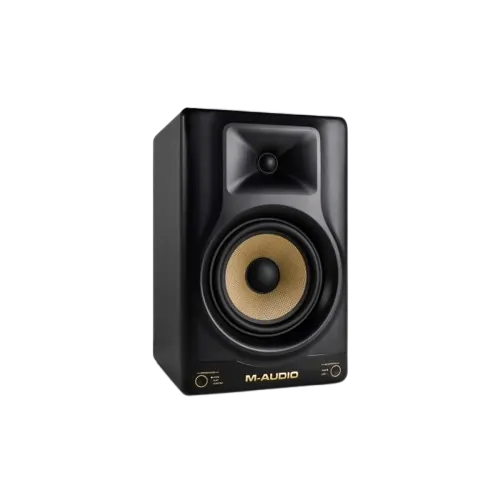
M-Audio Forty Sixty Review: The Hybrid 6.5″ Studio Monitor for Modern Creators
The M-Audio Forty Sixty is a deliberate attempt to rethink what a studio monitor is supposed to be. Instead of chasing one job, M-Audio built a speaker that aims to work as a serious mixing reference, a DJ booth monitor, and a Bluetooth-streaming desk speaker for everyday listening — all in the same cabinet. The result is one of the most genuinely versatile monitors at its price, even if that hybrid ambition brings a few trade-offs compared with single-purpose specialists.
If you produce, DJ, podcast or create content and you’re tired of keeping a separate “studio” setup and “lifestyle” setup on the same desk, this is a monitor worth understanding properly. Below is a full breakdown of the build, the connectivity, the sound, and — crucially — who it’s actually for.
What Is the M-Audio Forty Sixty?
The M-Audio Forty Sixty is the smaller of the two models in M-Audio’s Forty Series, sitting beneath the larger 8-inch Forty Eighty. It represents a clear change of direction for the brand, effectively replacing the long-running BX-series that many beginners cut their teeth on for years.
What makes the Forty Series different is its refusal to treat “studio” and “consumer” as separate worlds. M-Audio has leaned into the reality that modern creators do everything in one room, on one set of speakers — writing beats at midnight, mixing the next morning, then streaming a playlist while they clean up. The Forty Sixty is engineered around that workflow rather than fighting it.
Build and Design
Cabinet and Finish
The build is dense and well finished. The cabinet is MDF with a gently curved profile in matte black, with a limited Silver edition also offered through Guitar Center. At around 7.2 kg per monitor, the M-Audio Forty Sixty has real mass — it feels solid in the hand, and the cabinet stays inert at moderate playback levels. That weight is a good sign: heavier cabinets generally mean less unwanted resonance colouring your sound.
A foam isolation pad is included in the box, which is a thoughtful touch at this price and saves you an extra purchase if you’re placing these directly on a desk.
Drivers: Kevlar Woofer and Soft-Dome Tweeter
The 6.5″ woofer uses a Kevlar weave cone, which delivers the tight, articulate low end Kevlar drivers are known for. Above it sits a 1″ soft-dome tweeter mounted behind a small waveguide for controlled dispersion. The soft-dome-plus-waveguide combination gives a politer, less aggressive top end than ribbon or metal-dome designs — easier to listen to over long sessions, if slightly less “etched” in the very high frequencies.
That 6.5″ driver matters more than it sounds. Plenty of budget monitors aimed at beginners use 4- or 5-inch woofers, and you simply can’t get the same low-end reach from a smaller cone. The larger driver is a big part of why this monitor punches above its weight in the bass.
Connectivity: Where the M-Audio Forty Sixty Gets Clever
This is the headline, and it’s where the Forty Sixty earns its “hybrid” label.
Balanced XLR and TRS Inputs
Round the back you get a balanced XLR input and a balanced 1/4″ TRS input — exactly what you’d expect on any proper studio monitor. A rear-panel trim control lets you dial in the level of those analogue inputs so you can match a pair cleanly and integrate the speakers into any interface-based setup. This is the connection you’ll use for all serious mixing work, because a cabled balanced signal is the cleanest path into the speaker.
Bluetooth 5.0 with True Wireless Stereo
Here’s the twist: the Forty Sixty also includes Bluetooth 5.0 with True Wireless Stereo (TWS) support. That means you can pair the left and right monitors as a genuine stereo Bluetooth pair and stream straight from a phone, laptop or tablet — no interface, no cables.
For producers who want to A/B a mix on their phone, content creators playing reference tracks wirelessly, or anyone who uses the same speakers for both work and relaxing, this is genuinely useful. It collapses two setups into one and removes a lot of friction from the day-to-day.
A Note on Bluetooth Fidelity
Be realistic about what Bluetooth is and isn’t. The wireless path isn’t lossless and can’t match a properly cabled balanced connection for fidelity or latency. It’s perfectly listenable for casual playback and quick reference checks, but you should never make final mixing decisions over Bluetooth. Treat it as a convenience feature, not a replacement for the wired inputs — use the cable when accuracy matters, and the wireless link when it doesn’t.
DSP and the Three Listening Modes
The other modern touch is the onboard DSP, controlled by a single front-panel button that cycles through three listening modes. Built-in digital processing at this price is unusual, and it’s arguably more flexible than the analogue filtering most rivals offer.
Flat Mode
Flat mode gives you a neutral, mix-reference frequency response. This is the setting for any serious decision-making — tracking, mixing, mastering, editing. If you’re working on something that needs to translate to other systems, this is the only mode you should trust.
Hype Mode
Hype mode emulates the boosted-bass, scooped-mid, lifted-treble curve you find in earbuds, car stereos and consumer speakers. It’s not a gimmick: flipping to Hype is a fast, useful way to hear roughly how your track will sound on the kind of gear your audience actually uses. It’s also simply fun for casual listening when the work is done.
Custom Mode and the Studio Control App
Custom mode is where the M-Audio Forty Sixty pulls ahead. Through the free M-Audio Studio Control App (iOS and Android), you get a 5-band EQ to build your own profile — to compensate for your room’s acoustics, tame a boomy corner, or just tune to taste. App control is far more flexible than dip switches or rear pots, and much easier to tweak from the listening position rather than crawling behind the speaker. It’s a smart, modern implementation that genuinely adds value.
How the M-Audio Forty Sixty Sounds
Midrange and Highs
In Flat mode, the M-Audio Forty Sixty is detailed, accurate and surprisingly composed for a budget monitor. The midrange is honest, and the highs are crisp without turning harsh — the soft-dome tweeter keeps things smooth and fatigue-free. Vocals, snares and lead instruments sit where they should, and there’s enough resolution to make sensible balance and EQ decisions.
It’s worth being straight here, as any honest review should be: this is a versatile, beginner-friendly monitor, not a surgical reference tool. Dedicated mix engineers chasing the last few percent of detail will out-resolve it with more focused designs. For most home and project work, though, it’s more than accurate enough.
Bass and Low-End Extension
The 6.5″ Kevlar woofer delivers real punch, and bass extension reaches down to around 39 Hz at -10 dB — impressive for a cabinet this size and competitive with monitors costing noticeably more. That makes the M-Audio Forty Sixty a strong fit for bass-heavy genres like hip-hop and electronic music, where you need to actually hear the low end you’re shaping.
The port is rear-firing, so it wants roughly a foot of clearance from the back wall to perform at its best. Push it tight against a wall and you’ll get the predictable low-frequency build-up that affects any rear-ported design — though the Custom EQ in the app can claw some of that back.
Power, Headroom and Noise
Bi-amplification splits 60 W to the woofer and 40 W to the tweeter via Class AB amps, for 100 W total. Maximum SPL of 113 dB gives strong dynamic headroom for a monitor this size, and these speakers get loud and stay clean — they’re hard to push into distortion even at high volume. A clean 120 dB signal-to-noise ratio and Burr-Brown A/D conversion on the input stage mean the signal path stays quiet and doesn’t smear character onto your audio.
Placement and Setup Tips
Getting the best from these monitors takes a little care, so here’s some practical guidance.
Port Clearance
Because the port fires backwards, give each speaker around 30 cm (a foot) of breathing room from the wall. If your desk forces them closer, drop into the app and gently pull back the low shelf to compensate for the extra bass reinforcement.
Heat and Class AB Amplification
The Class AB amplification is worth understanding in one practical sense: it runs warmer than the Class D designs used by many KRK and JBL rivals. Heat dissipates through the cabinet, so the rear panel warms up noticeably after long sessions. It isn’t a reliability worry, but leave some airflow behind the monitors and don’t box them into a sealed shelf.
Dispersion and Room Forgiveness
Wide dispersion — quoted at 120° horizontal by 90° vertical — makes these monitors easy to position and forgiving in untreated rooms. The sweet spot is generous, so small movements off-axis won’t wreck the stereo image. Still, aim the tweeters roughly at ear height and toe them in toward the listening position for the cleanest centre image.
Who Should Buy the M-Audio Forty Sixty?
Ideal Users
The Forty Sixty makes the most sense for creators who don’t want a hard line between “studio” and “lifestyle” speakers. Beat-makers who sketch ideas over Bluetooth from a phone, then plug in to mix. DJs who use one pair for booth monitoring, practice and casual listening. Podcasters and content creators flipping between editing and reference playback. If your day moves fluidly between making and listening, this hybrid feature set is a real workflow improvement.
It’s also an excellent first set of studio monitors. A 6.5″ driver, app-based EQ and Bluetooth in one affordable package is a lot of capability for someone just starting out.
Who Should Look Elsewhere
If you want a pure, focused reference monitor with no extras and the cleanest possible signal path — and especially if precise, detailed mixing is your priority — more traditional options are arguably sharper tools at a similar price. The Kali LP-6 and Yamaha HS5 are both more single-minded about flat, revealing accuracy, and that focus shows when you’re doing critical work.
M-Audio Forty Sixty vs the Competition
It’s worth putting this monitor next to its obvious rivals so you can choose with clear eyes.
Against the Kali LP-6, the M-Audio Forty Sixty trades a little outright reference accuracy for far more versatility — the Kali is the more clinical mixing tool, while the M-Audio is the more flexible all-rounder. Against the Yamaha HS5, a long-standing 5-inch reference favourite, the Forty Sixty offers a bigger woofer, more low-end reach and modern connectivity the Yamaha simply doesn’t have, while the HS5 leans on its reputation for an honest, no-nonsense response.
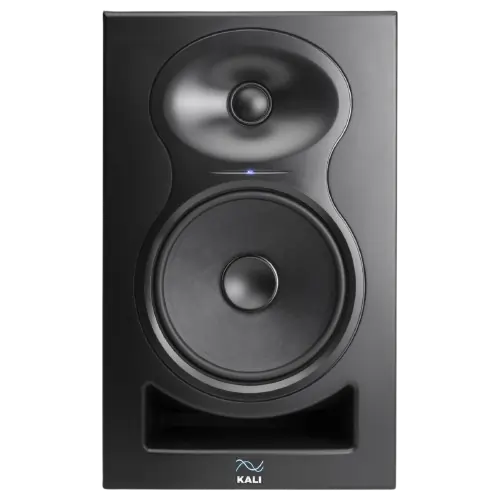
In short: if you want one speaker that does the serious work and the fun stuff, the Forty Sixty wins on flexibility. If you only care about the most revealing possible mix, the focused alternatives still have the edge.
Wrapping Up
For producers and creators who want a genuinely modern, multi-purpose 6.5″ monitor that bridges studio and lifestyle use without dropping the basics, the M-Audio Forty Sixty is one of the most interesting options on the market. The Bluetooth-plus-balanced approach is a real, practical workflow upgrade, and the app-controlled DSP lets you tune the speaker precisely to your room and taste.
It won’t out-resolve a dedicated reference monitor for surgical mixing, and the Bluetooth path is convenience rather than reference fidelity. But taken as a whole — versatile, well built, easy to live with and keenly priced — the Forty Sixty is a smart, forward-looking choice for the way people actually make and enjoy music today.
You can read the full official specs on the M-Audio Forty Sixty product page, and MusicRadar’s hands-on budget-monitor coverage echoes the verdict that this is a thrilling, versatile pick for the modern creator.