KRK Rokit 5 G5 Review: A Modern Budget Monitor That Adapts to You
The KRK Rokit RP5 is one of the most recognisable names in budget studio audio — and the G5 is the biggest overhaul the line has ever had.
KRK reengineered this generation from the ground up: a new silk-dome tweeter, a redesigned Kevlar-aramid woofer, fresh Class D amplification, and an LCD-driven DSP with 25 boundary and tuning EQ combinations. The result is the most flexible monitor in its price bracket. Full specs live on the official KRK product page.
Design and Build
Classic Look, Refined Finish
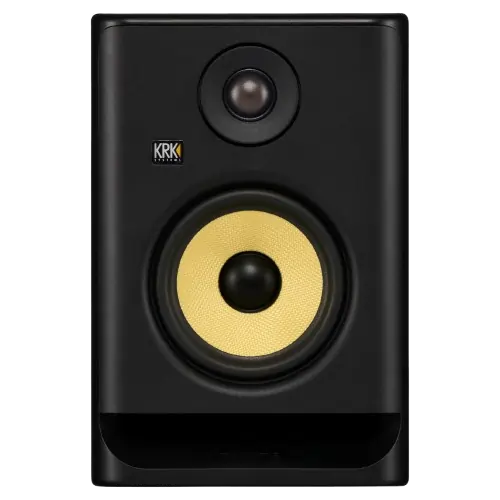
The G5 keeps the iconic Rokit silhouette and that unmistakable yellow-coned woofer, but everything has been sharpened. The cabinet now wears a sleeker matte black finish.
Clever touch: it ships with two magnetic faceplates, so you can run the bold yellow-cone look or switch to understated all-black.
Solid for the Weight
At just under 5 kg, the build feels reassuringly solid. The rear LCD and rotary encoder deliver a level of control that analogue switches simply can’t match.
The Headline Feature: Three Voicing Modes
This is what sets the KRK Rokit G5 apart from rivals.
Mix Mode
A flat frequency and phase response — the setting for serious mix decisions, mastering checks and critical listening.
Create Mode
A hyped, flattering voicing with boosted lows and highs. Built for beat-making, writing and casual listening.
Focus Mode
A midrange-forward voicing for vocal analysis and detail work.
Switching is genuinely useful — one pair of monitors gives you two very different listening experiences. The one trap: mixing in Create mode by accident. The LCD shows your current mode clearly, but stay disciplined.
Sound Quality
In Mix mode, this monitor is even-handed and balanced.
The new silk-dome tweeter is a real step forward — smoother and less metallic than the old Kevlar design, with clean detail up to 40 kHz. The Kevlar woofer keeps that signature Rokit low end: tight and punchy.
The front-firing port gives the bass real impact without the smearing a rear port suffers near a wall. With 104 dB max SPL at 1 m and plenty of dynamic headroom, these monitors don’t audibly compress when pushed.
DSP Room Tuning and the KRK App
The 25-position DSP EQ is set via the rear LCD or wirelessly through the free KRK App on iOS and Android.
The app makes setup far easier than menu-diving with the encoder. The boundary correction settings are genuinely effective for desk placement, wall proximity and the awkward room geometry that defines most home studios.
Connectivity and Power
Each monitor has a single XLR/TRS combo input — a clean rear panel, but only one source.
The bi-amp split is 35 W woofer / 20 W tweeter: modest on paper, sufficient in practice. Class D amps run cool even after long sessions. You can compare bundles and stands on the Sweetwater listing.
Two Things Worth Knowing
- LCD controls are a trade-off. More flexible than knobs, but slower for quick tweaks. Long-time KRK Rokit users may miss the immediacy of the older analogue controls.
- Class D has a different character to the Class A/B amps in the older G3 Classic (still sold by KRK). Neither is better — but worth knowing if you’re upgrading.
Wrapping Up
For beat-makers, electronic producers and content creators who want a monitor that adapts to multiple workflows, the KRK Rokit 5 G5 is one of the most compelling sub-£200 options on the market.
Switchable voicing modes, app-controlled DSP, a refined silk-dome tweeter and the proven Kevlar woofer make this a genuinely modern budget monitor — and one that will grow with you as your mixing skills develop.